

What Is Terrazzo Flooring? Outdoor Uses, Materials, and Care
Terrazzo flooring is one of the rare materials that feels equally rooted in history and at home in contemporary design. Celebrated for its layered beauty and remarkable durability, it has evolved from a centuries-old craft into a sophisticated surface that performs across a wide range of architectural settings—including thoughtfully designed outdoor spaces.
Follow along as we explore what terrazzo flooring is, what it's made of, where it performs best outdoors, how it compares with materials like concrete and porcelain, and what kind of care it requires over time. Whether you're planning a patio, pool surround, or outdoor entertaining area, understanding terrazzo's material qualities is the first step toward deciding if it's the right fit for your project.
What You Need to Know
- Terrazzo is a composite surface made from stone or glass aggregates set into a cement or resin binder, creating a durable material with a distinctive handcrafted appearance.
- For outdoor applications, cement-based terrazzo is generally the preferred choice because it is better suited to temperature changes, weather exposure, and long-term exterior performance.
- The beauty of terrazzo comes from its aggregate mix—marble, quartz, granite, and glass chips can be combined in different sizes, colors, and ratios to create highly personalized surfaces.
- Terrazzo works especially well for patios, pool decks, terraces, and outdoor living areas where visual character and everyday durability need to coexist.
- The right finish matters outdoors: lower-gloss or lightly textured surfaces provide better traction in wet areas while preserving terrazzo’s refined appearance.
- Like other premium exterior materials, terrazzo performs best when properly installed and sealed, with routine care that protects the surface without requiring intensive maintenance.
- When compared with concrete or porcelain, terrazzo offers a distinct advantage for design-led spaces: a level of depth, variation, and craftsmanship that makes the surface part of the overall architecture.
What Is Terrazzo Flooring?
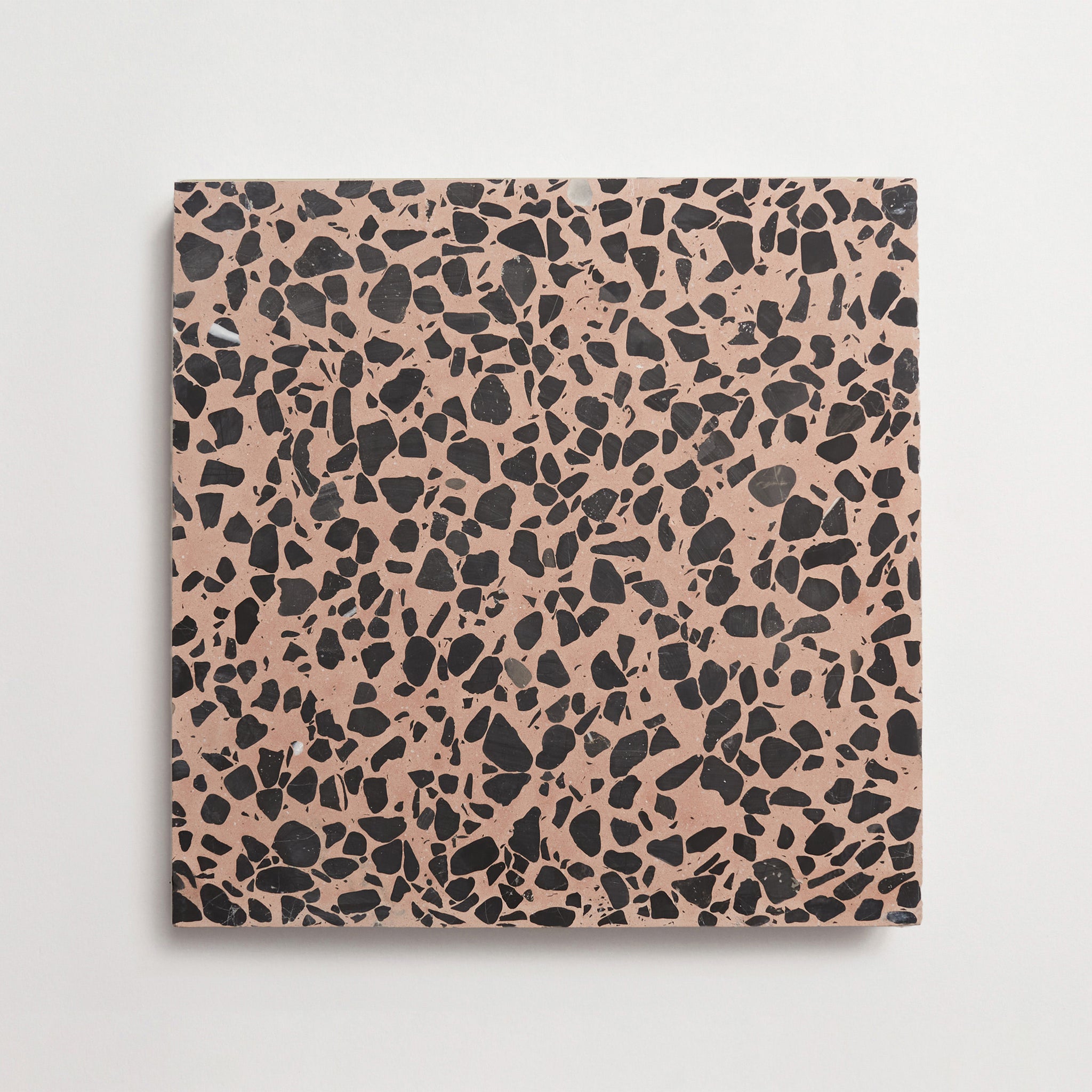
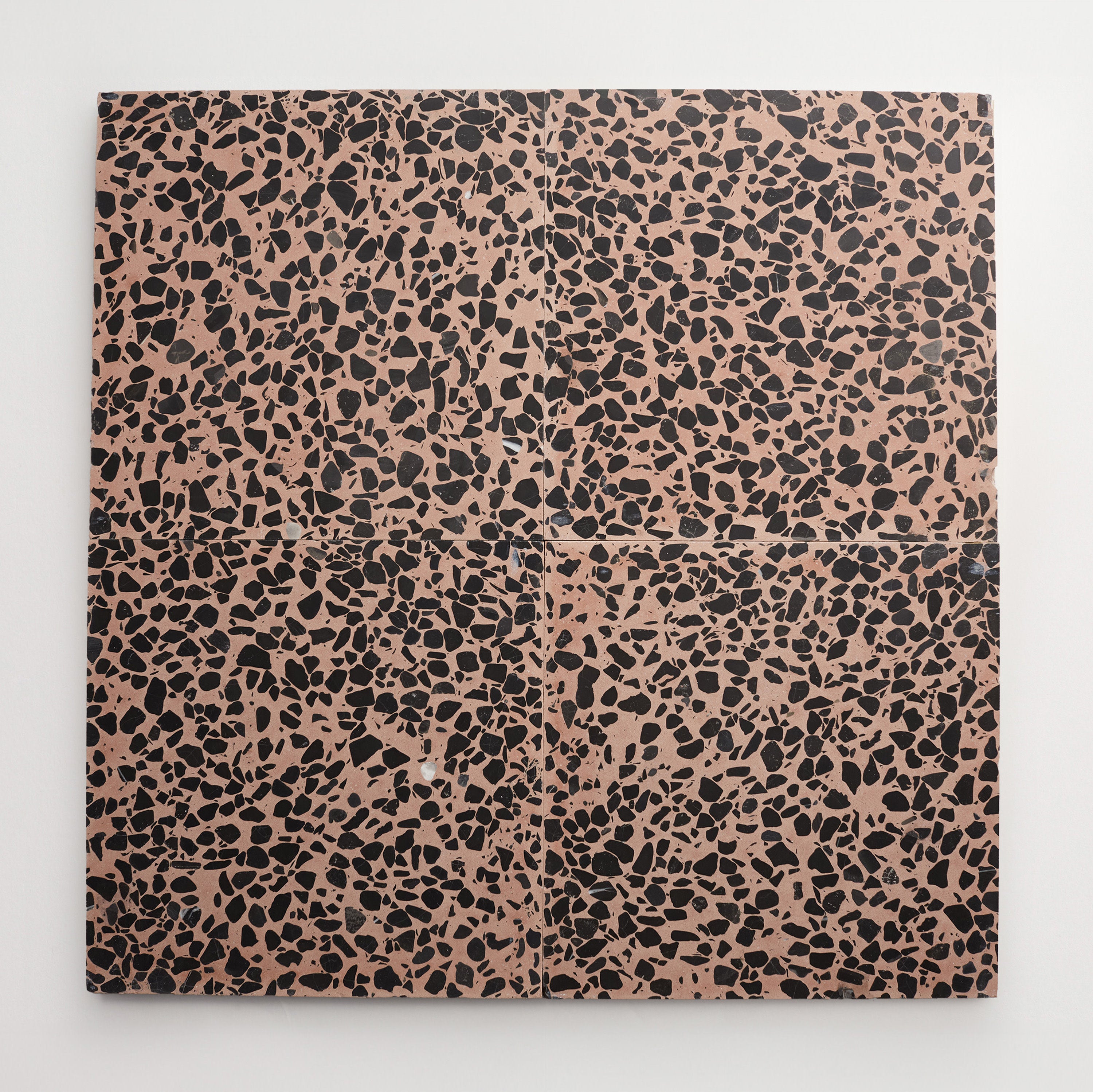
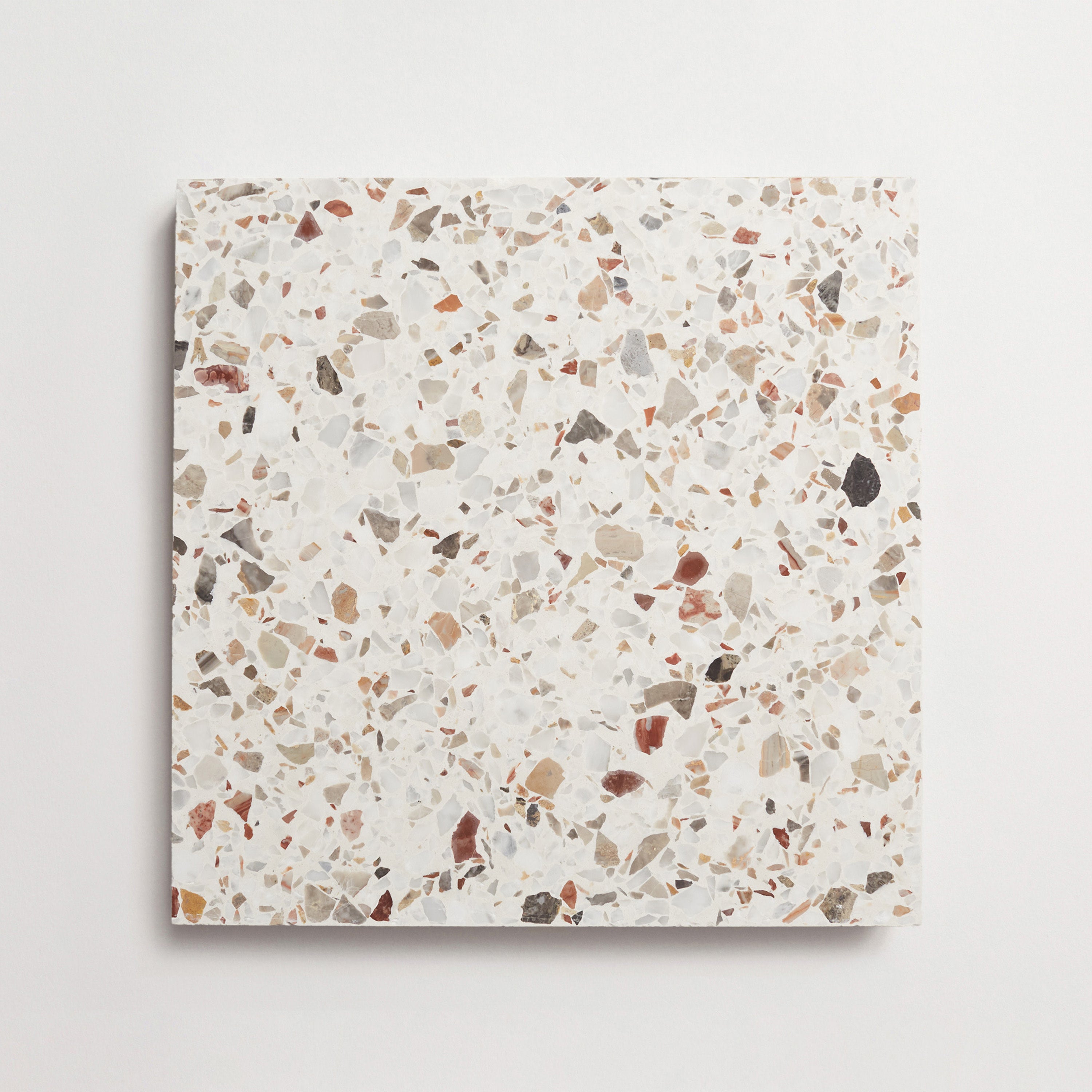
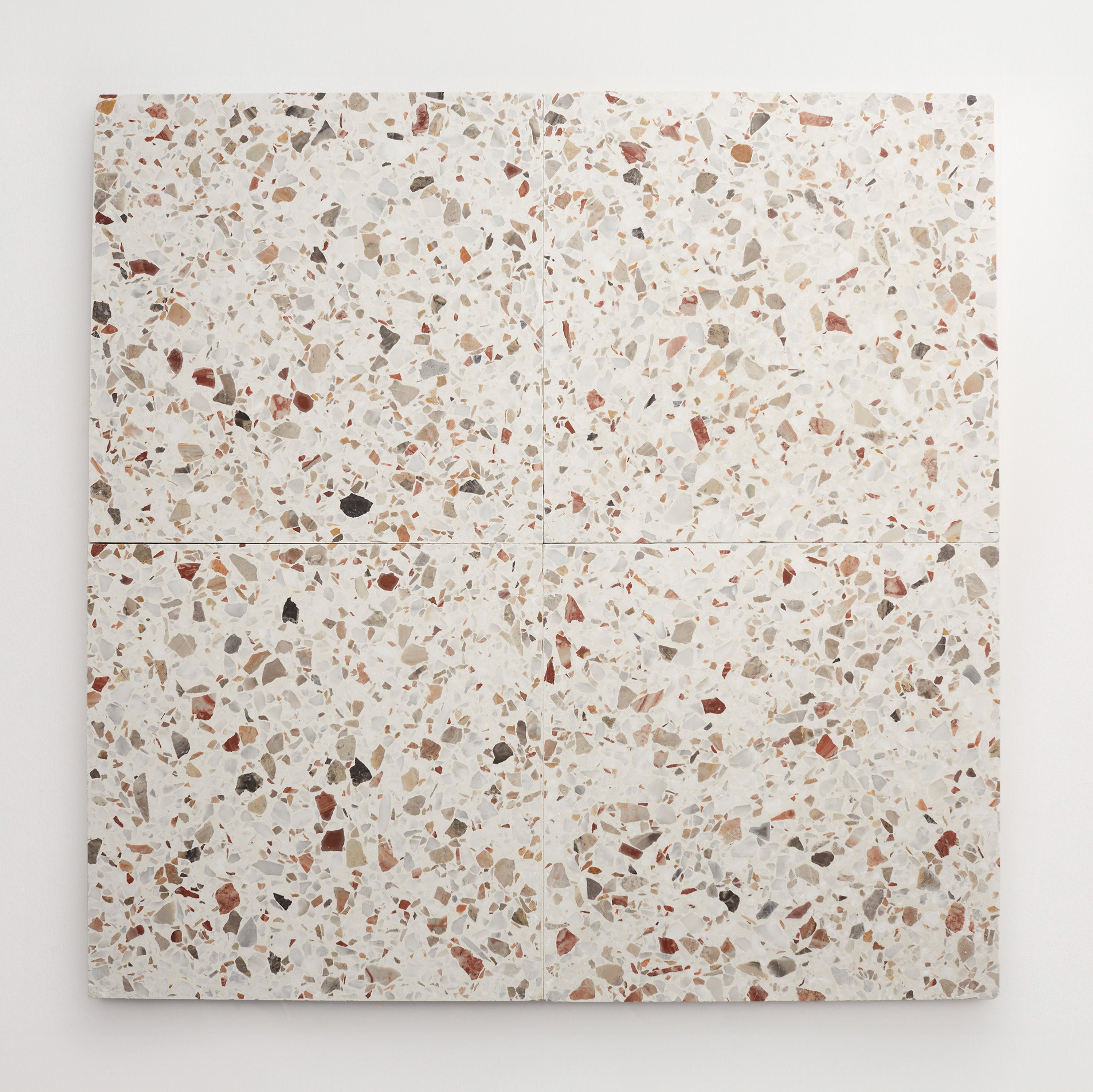
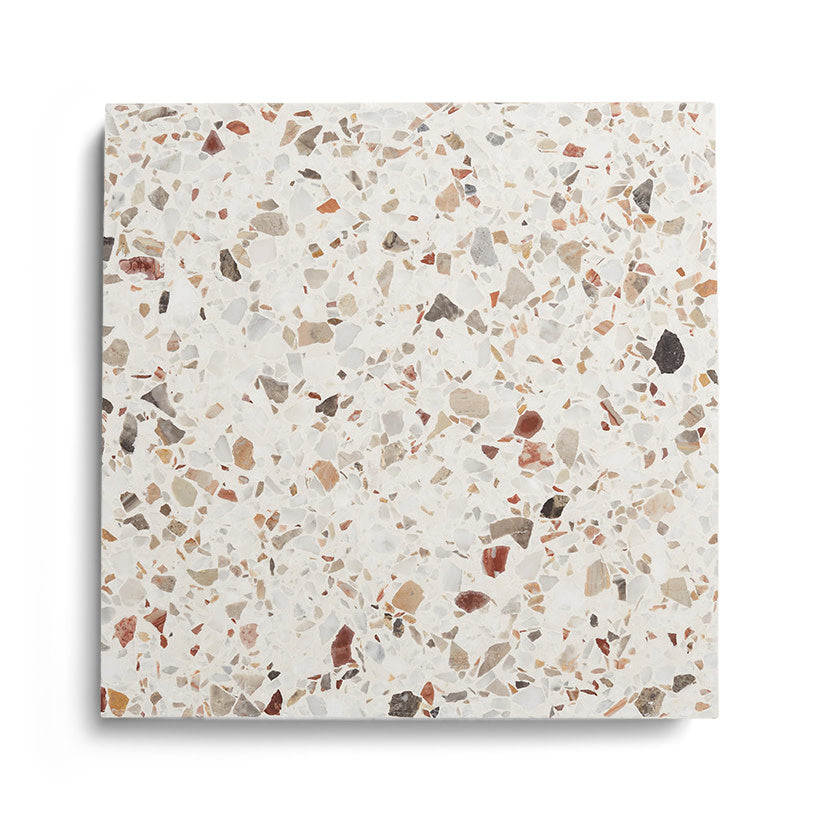
Terrazzo flooring is a composite surface made by embedding decorative aggregates—such as marble, quartz, granite, or glass chips—into a cement or resin binder before grinding and finishing the surface to reveal its distinctive pattern. It can be installed as a poured-in-place system or manufactured as precast tile, with both formats used in appropriate outdoor applications. The size, proportion, and color of the aggregate are what give terrazzo its unmistakable character, allowing the finished surface to range from quiet and understated to bold and highly expressive.
What Is Terrazzo Flooring Made Of?
Understanding what terrazzo flooring is made of helps explain why some terrazzo surfaces thrive outdoors while others are intended exclusively for interior spaces. Every terrazzo installation combines four essential elements: decorative aggregate, a binder, pigments, and a finished surface that determines both appearance and performance.
Aggregate chips are the visible pieces that give terrazzo its character. Marble is the traditional choice, but quartz, granite, and glass are also commonly used to create different colors, textures, and visual depth.
Aggregate is suspended in either a cement-based or epoxy-based binder. Cement-based terrazzo is the preferred system for outdoor environments because it tolerates temperature fluctuations, weather exposure, and seasonal movement more effectively. Epoxy-based terrazzo, by contrast, is typically reserved for interiors, where its vibrant color range and seamless finish can be enjoyed without prolonged UV exposure or extreme weather conditions.
Mineral pigments are blended into the binder to establish the base color, allowing designers to create everything from soft, neutral palettes to bold architectural statements.
For the final finish, once the terrazzo has cured, it is ground to expose the aggregate and finished to achieve the desired appearance. This influences not only how the surface looks, but also how it performs underfoot, particularly in exterior settings where texture and slip resistance are important considerations.
Together, these components create a surface that balances craftsmanship with durability. For outdoor projects, cement-based terrazzo remains the benchmark, combining the timeless appeal of exposed aggregate with the resilience needed to perform in changing weather conditions.
What Is Terrazzo Flooring Used For?
The answer to this question extends well beyond interiors and into outdoor floor tiles. In outdoor settings, terrazzo is valued for its ability to combine architectural presence with everyday durability, making it an excellent choice for spaces that are designed to be lived in as much as admired.
Terrazzo performs beautifully on patios, pool decks, terraces, covered outdoor rooms, and garden walkways, where its dense surface and distinctive aggregate create a finish that feels both refined and resilient. It is especially well suited to projects where visual identity matters just as much as long-term performance, offering far more character than a conventional concrete slab while standing up to the demands of outdoor living.
Another advantage is its versatility of installation. Terrazzo can be specified as a seamless poured surface for expansive entertaining areas or as tile, bringing the same material richness to smaller courtyards, outdoor kitchens, or intimate seating areas. This flexibility allows designers to tailor the scale and rhythm of the installation to the architecture rather than forcing the space to conform to a single format.
OUTERclé's terrazzo collection reflects this contemporary approach to outdoor design, demonstrating how cement-based terrazzo can bring craftsmanship, texture, and enduring material character to exterior environments without sacrificing the performance required for everyday use.
Is Terrazzo a Good Outdoor Flooring Choice?
Yes—cement-based terrazzo is an excellent outdoor flooring choice when it is properly specified, installed, and maintained. Its combination of durability, visual depth, and timeless material character makes it especially well suited to patios, terraces, pool surrounds, and other exterior spaces where design and performance are equally important.
Like any premium surface material, terrazzo performs best when viewed as part of a complete system rather than as a standalone product. The right surface finish, professional installation, appropriate sealing, and consideration of the local climate all contribute to how well it will age over time. A textured finish may be the better choice for a pool deck, while a smoother finish can work beautifully in a covered outdoor room where moisture exposure is more limited.
It's also worth remembering that no flooring material is universally perfect. Porcelain, natural stone, concrete, and terrazzo each have strengths that suit different projects. The goal is not to find a one-size-fits-all solution, but to select the material whose performance, maintenance requirements, and visual qualities best match the way the space will actually be used.
When those factors are aligned, cement-based terrazzo offers something few outdoor materials can: a surface that is both highly functional and unmistakably expressive, bringing lasting craftsmanship to everyday outdoor living.

Terrazzo for Patios, Pools, and Outdoor Living
Terrazzo has become a favorite in outdoor living spaces because it balances visual sophistication with everyday practicality. Across patios, terraces, pool decks, courtyard design, and outdoor entertaining areas, it creates a sense of continuity that helps the landscape feel intentional rather than pieced together. Its layered aggregate and broad range of colors offer a refined surface character that complements both clean-lined contemporary architecture and more traditional homes.
Around pools, finish selection becomes especially important. While terrazzo is often associated with polished interiors, exterior applications benefit from matte, lightly textured, or lower-gloss finishes that provide better underfoot traction without sacrificing the material's distinctive depth and richness. When paired with thoughtful drainage and professional installation, cement-based terrazzo can deliver the balance of safety and elegance that poolside environments demand.
One of terrazzo's greatest design strengths is its ability to recede without disappearing. Rather than competing for attention, it creates a calm, cohesive backdrop that allows surrounding elements—outdoor furniture, architectural planting, sculptural containers, and the reflective surface of a pool or water feature—to become the focal points. The result is an outdoor space that feels layered and composed, where every material contributes to the whole instead of demanding attention on its own.
Looking for further outdoor tile design inspiration? Check our guide to patio tile ideas.
Terrazzo vs. Concrete and Porcelain Outdoors
Terrazzo, concrete, and porcelain can all perform beautifully outdoors, but they achieve different design goals. Among types of outdoor tiles, the best choice depends on the character you want to create, the conditions the surface will face, and the level of maintenance you're comfortable with over time.
| Consideration | Terrazzo | Concrete | Porcelain |
|---|---|---|---|
| Appearance & character | Rich, layered surface with exposed aggregate that creates depth and visual interest. Reads as artisan and architectural. | Clean, understated, and contemporary. Can be colored or textured, but typically has a more uniform appearance. | Available in an extensive range of colors, patterns, and stone looks, offering exceptional design flexibility with a consistent finish. |
| Surface texture | Finish can range from smooth to lightly textured, allowing the surface to be tailored for outdoor applications such as patios and pool decks. | Texture varies depending on the finish, from broomed to exposed aggregate, making it adaptable to different uses. | Available in matte and textured exterior finishes designed to provide traction while maintaining a refined appearance. |
| Maintenance expectations | Requires periodic sealing and routine care to preserve its appearance, particularly in high-exposure environments. | Generally low maintenance, though cracking, staining, and resealing may become necessary over time. | Very low maintenance thanks to its dense, non-porous surface, which resists stains, moisture, and fading. |
| Best outdoor applications | Ideal for patios, terraces, pool surrounds, and entertaining spaces where craftsmanship and material character are priorities. | Well suited to driveways, patios, walkways, and large utility surfaces where durability and simplicity are the focus. | Excellent for patios, outdoor kitchens, walkways, and pool areas where weather resistance and ease of maintenance are key considerations. |
Rather than thinking of these materials as competitors, it's more helpful to think of them as serving different design intentions. Concrete delivers simplicity and utility, porcelain emphasizes performance and versatility, and terrazzo offers a level of craftsmanship and visual richness that rewards close attention. Choosing between them is ultimately a matter of balancing aesthetics, maintenance expectations, and how you want your outdoor space to feel for years to come.
Surface Finish, Slip Resistance, and Heat
The finish you choose has a direct impact on how terrazzo performs outdoors. A high-gloss polished surface may showcase the aggregate beautifully in an interior setting, but in an exterior environment—especially around pools, outdoor showers, or patios exposed to rain—it can become less suitable because it offers less traction when wet.
For most outdoor applications, matte or lower-gloss finishes strike the best balance between appearance and performance. Lightly textured surfaces and appropriately specified non-slip finishes preserve terrazzo's depth and craftsmanship while providing more confident footing under everyday conditions. Rather than changing the character of the material, these treatments allow it to retain its refined appearance while making it better suited to outdoor living. For a broader look at selecting safe exterior surfaces, see OUTERclé's guide to non-slip outdoor tiles.
Heat is another consideration that deserves attention. Like many cement- and stone-based materials, terrazzo has significant thermal mass, meaning it absorbs and stores heat when exposed to direct sunlight. How warm it feels underfoot depends on several factors, including the color of the surface, the finish, and the amount of shade the space receives throughout the day. Lighter terrazzo palettes generally remain more comfortable than darker ones, while pergolas, mature landscaping, or thoughtfully placed shade structures can make a noticeable difference during the hottest hours.
When finish, texture, color, and site conditions are considered together, terrazzo can deliver an outdoor surface that feels as comfortable as it looks—offering the visual refinement the material is known for without compromising everyday usability.
How to Care for Outdoor Terrazzo
One of terrazzo's enduring strengths is that it doesn't demand constant attention to look its best. Regular sweeping removes grit that can gradually dull the surface, while occasional washing with water and a pH-neutral cleaner helps lift dirt, pollen, and everyday outdoor debris without damaging the finish. Avoid harsh acidic or abrasive cleaners, as they can gradually etch the cement binder and diminish the clarity of the exposed aggregate.
Sealing plays an important role in the long-term performance of cement-based outdoor terrazzo. A high-quality penetrating sealer helps reduce moisture absorption, minimizes staining from leaves, food, and oils, and protects the surface from the effects of repeated weather exposure. In most outdoor settings, resealing every two to five years is a reasonable guideline, though the ideal schedule depends on the local climate, the amount of foot traffic, and the level of sun and moisture the surface experiences. Always use a sealer specifically formulated for exterior cement-based terrazzo or natural stone surfaces, and follow the manufacturer's recommendations for application and maintenance.
Like any premium exterior material, terrazzo develops character over time. Rather than requiring intensive upkeep, it benefits from a consistent maintenance routine that preserves its depth, color, and finish while allowing the material to mature naturally. With thoughtful care, outdoor terrazzo remains a refined, durable surface that continues to reward both everyday use and close inspection for decades.
OUTERclé Terrazzo for Outdoor Spaces
Terrazzo is at its most compelling when it balances performance with artistry—when the surface does more than withstand the elements and instead becomes part of the architecture of an outdoor space. OUTERclé’s terrazzo collection offers a curated example of how this historic material can be reinterpreted for contemporary patios, terraces, pool surrounds, and outdoor living areas.
Designed with exterior environments in mind, artisan terrazzo brings together durability, weather resistance, and a level of visual depth that standard concrete surfaces often lack. The combination of carefully selected aggregates, refined color palettes, and a polished material finish creates a surface with dimension and character, allowing each installation to feel considered rather than purely functional.
For homeowners and designers looking to create an outdoor space with a stronger sense of permanence, terrazzo offers a unique middle ground: the resilience required for everyday exterior use with the craftsmanship and individuality of a custom material.
Discover the OUTERclé terrazzo outdoor tile collection and find the right surface for your outdoor space.
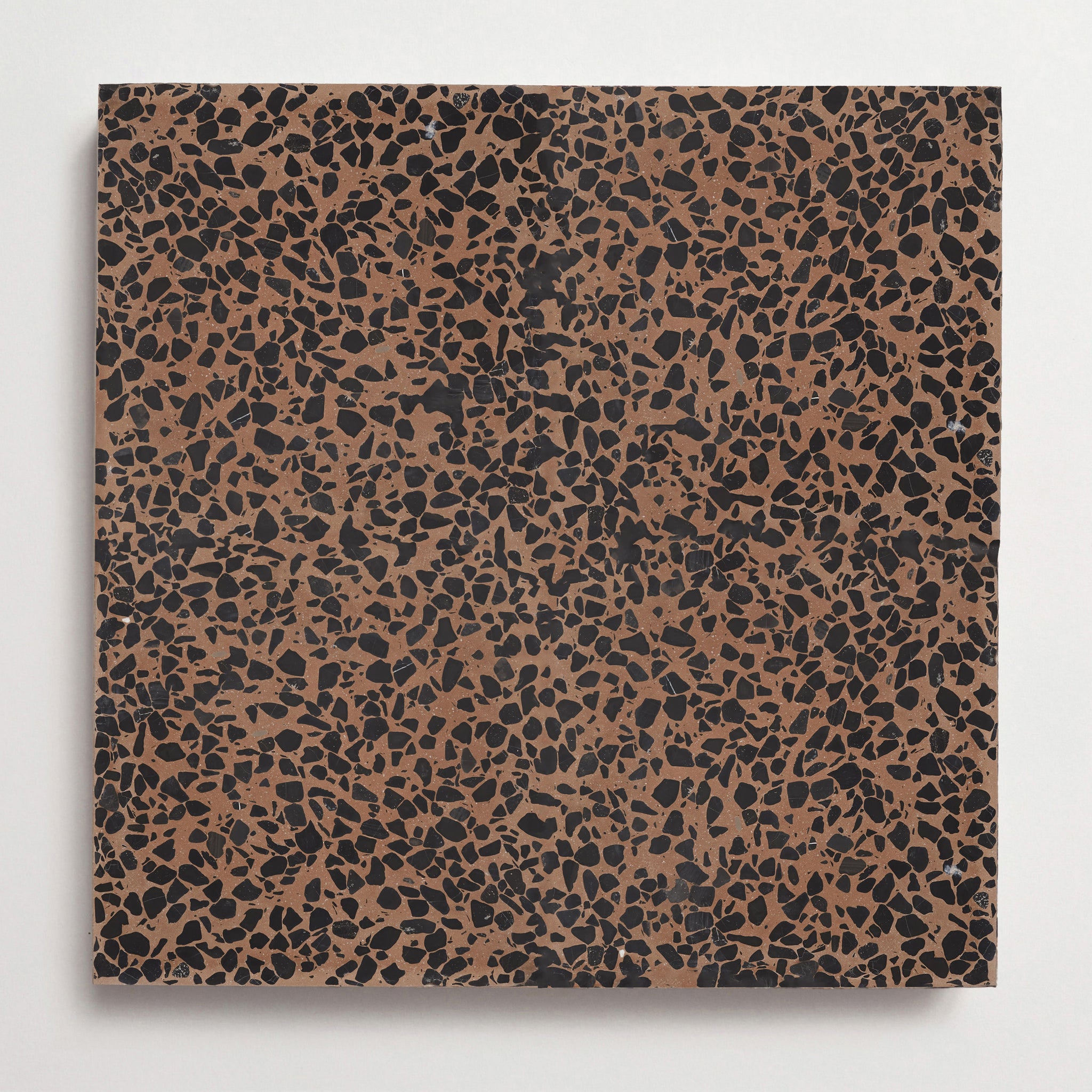
Colorway
-
Argilla
Collection
-
Dolce Vita Terrazzo
:
Sub Collection
-
Torrone I
Material
Length
-
4
" x
Width
-
4
" x
Thickness
-
¼
"
Unit of Measurement
-
sqft
/
Price per Unit
$
Colorway
-
Maronne
Collection
-
Dolce Vita Terrazzo
:
Sub Collection
-
Torrone I
Material
Length
-
8
" x
Width
-
8
" x
Thickness
-
⅞
"
Unit of Measurement
-
sqft
/
Price per Unit
$
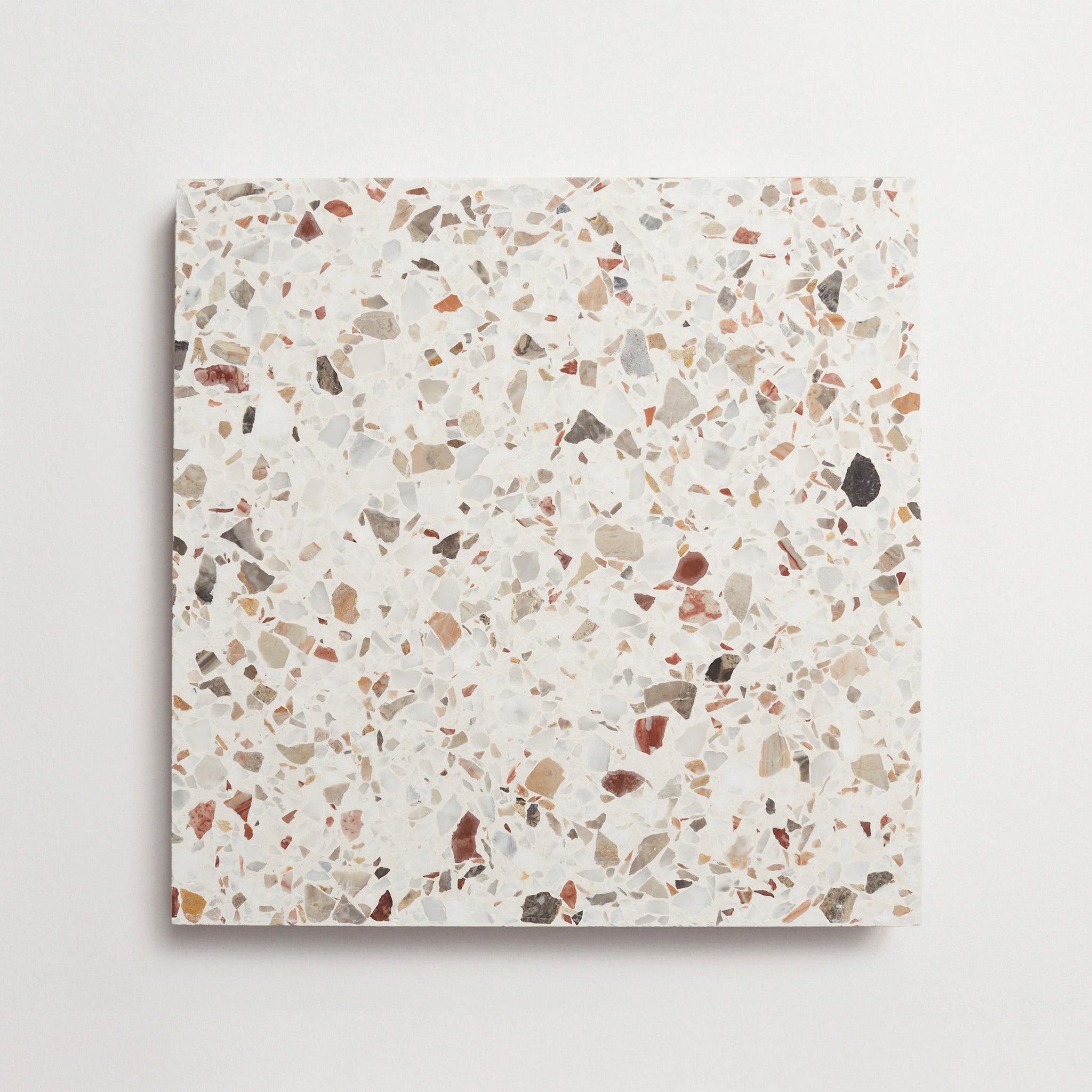
Colorway
-
Blanco
Collection
-
Dolce Vita Terrazzo
:
Sub Collection
-
Torrone II
Material
Length
-
4
" x
Width
-
16
" x
Thickness
-
¾
"
Unit of Measurement
-
sqft
/
Price per Unit
$