

Brick Farmhouse Exterior Ideas for Classic to Modern Curb Appeal
Slate, bluestone, and basalt. Three of the most requested stones in outdoor design are also three of the most frequently confused. It goes deeper than color or texture, too, reaching all the way to a trade name that can refer to entirely different materials depending on where you are in the world.
When comparing slate vs. bluestone vs. basalt, the goal isn't to crown one stone the winner. It's to understand the character, origin, and performance of each material, then choose the one that belongs in your particular outdoor room.


Natural stone walkway. Photo courtesy of Haberdoedas.

Basalt columns in Iceland. Photo courtesy of Dana Andreea Gheorghe.
Quick Facts About Slate, Bluestone, and Basalt
- Bluestone offers a consistent, architectural appearance that suits formal patios, entries, and driveways.
- Slate brings layered color variation and an artisanal character to gardens, courtyards, and outdoor living spaces.
- Basalt delivers a sleek, dark, modern aesthetic, with dense composition and low porosity that can benefit wet areas.
- All three stones can perform outdoors when appropriately selected for the climate, installation, and intended use.
- Finish matters as much as material: cleft, flamed, and honed surfaces offer different visual effects and levels of traction.
- Combining stones can create a more nuanced design than choosing a single material for every outdoor surface.
Three Stones, Three Origins
Understanding the difference between slate, bluestone, and basalt starts with how each material forms. Their geological histories influence their colors, textures, and performance, after all, giving each stone a distinct identity.
How Each Stone Forms
Bluestone, in its common northeastern US meaning, is a sedimentary feldspathic sandstone formed from compacted mineral grains. Slate is metamorphic, developing when shale transforms under heat and pressure into a dense stone with characteristic layers and cleavage. Basalt takes a different path entirely. As an igneous rock, it forms when volcanic lava cools and solidifies, creating a fine-grained material often recognized by its deep gray and black tones.
Where Each Stone Comes From
Bluestone has strong regional roots in Pennsylvania and New York, where quarrying traditions have made it a familiar choice for Northeastern landscapes. Slate comes from a wider range of sources, including Vermont, Virginia, Wales, and Brazil, with regional geology contributing different color palettes and textures. Basalt is quarried in volcanic regions worldwide, and much of the basalt used in US landscaping today comes from Asia, alongside established European sources.
For us, this sense of provenance is part of a material's appeal. Knowing where a stone comes from enriches its design story, connecting a space to the landscapes and craft traditions behind it.
A Note on the Name “Bluestone”
Bluestone is a trade name, not a single geological rock type. In the Northeastern United States, it typically refers to feldspathic sandstone, but in parts of Australia, the same name describes basalt. In other places, it can refer to slate or even limestone.
This regional variation is a major reason the terms slate vs. bluestone vs. basalt are so often compared — and confused. Throughout this article, bluestone refers to the common US Northeast sandstone.

The Character Each Stone Brings to a Room
Choosing between these stones is a design decision, not a contest of which is “best.” Each establishes a different mood, from bluestone's measured geometry to slate's natural variation and basalt's quiet intensity.
Bluestone’s Formal, Universal Presence
Bluestone's consistent color and texture create anarchitectural effect. Blue-gray tones, clean edges, and predictable patterns lend themselves to formal entries, structured patios, and driveways where the paving should complement the home's geometry.
For projects that call for order rather than visual movement, bluestone is an excellent choice. Its familiarity in Northeastern landscapes gives it a timeless quality, and carefully selected options can make the same stone feel distinctly modern.
Slate’s Layered, Painterly Range
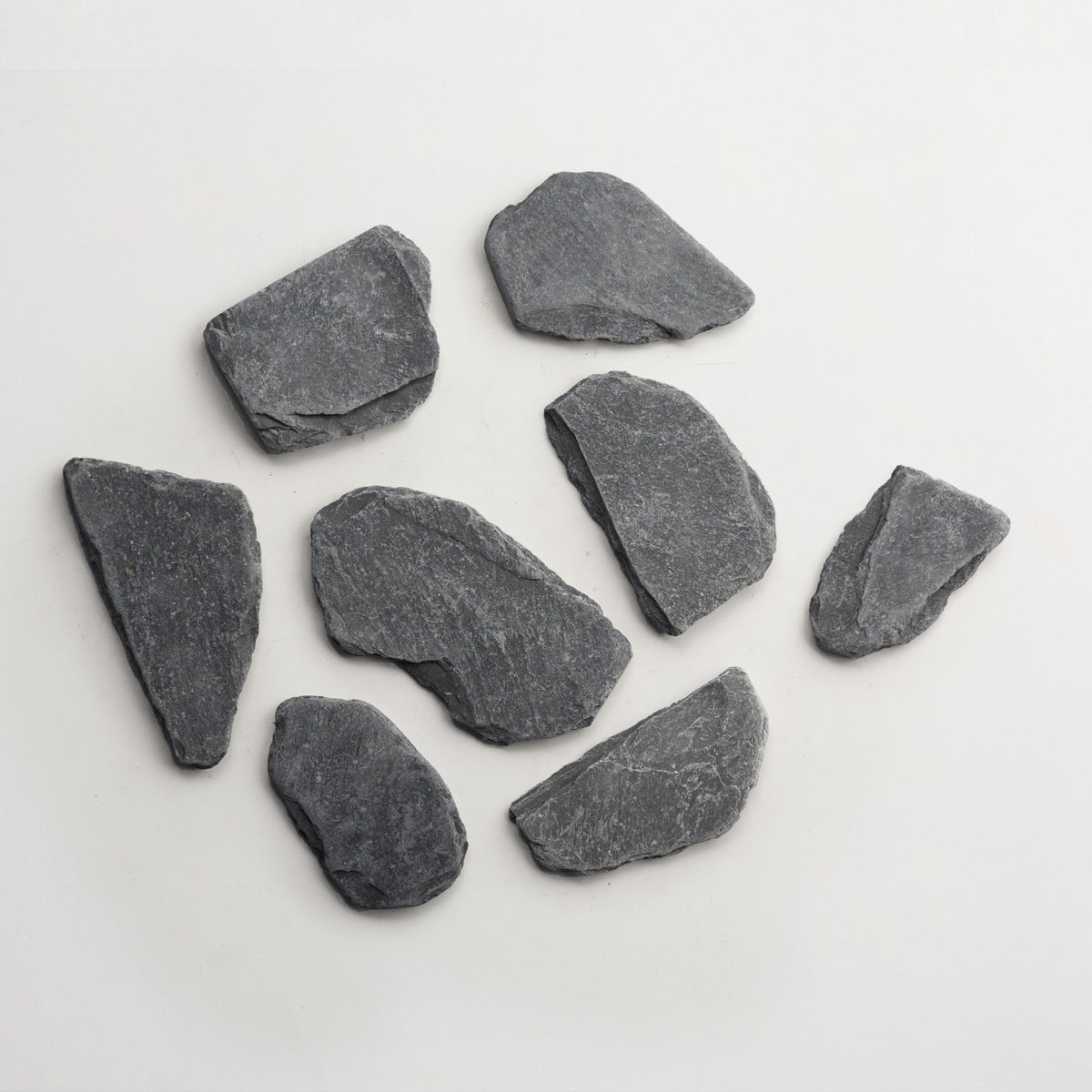
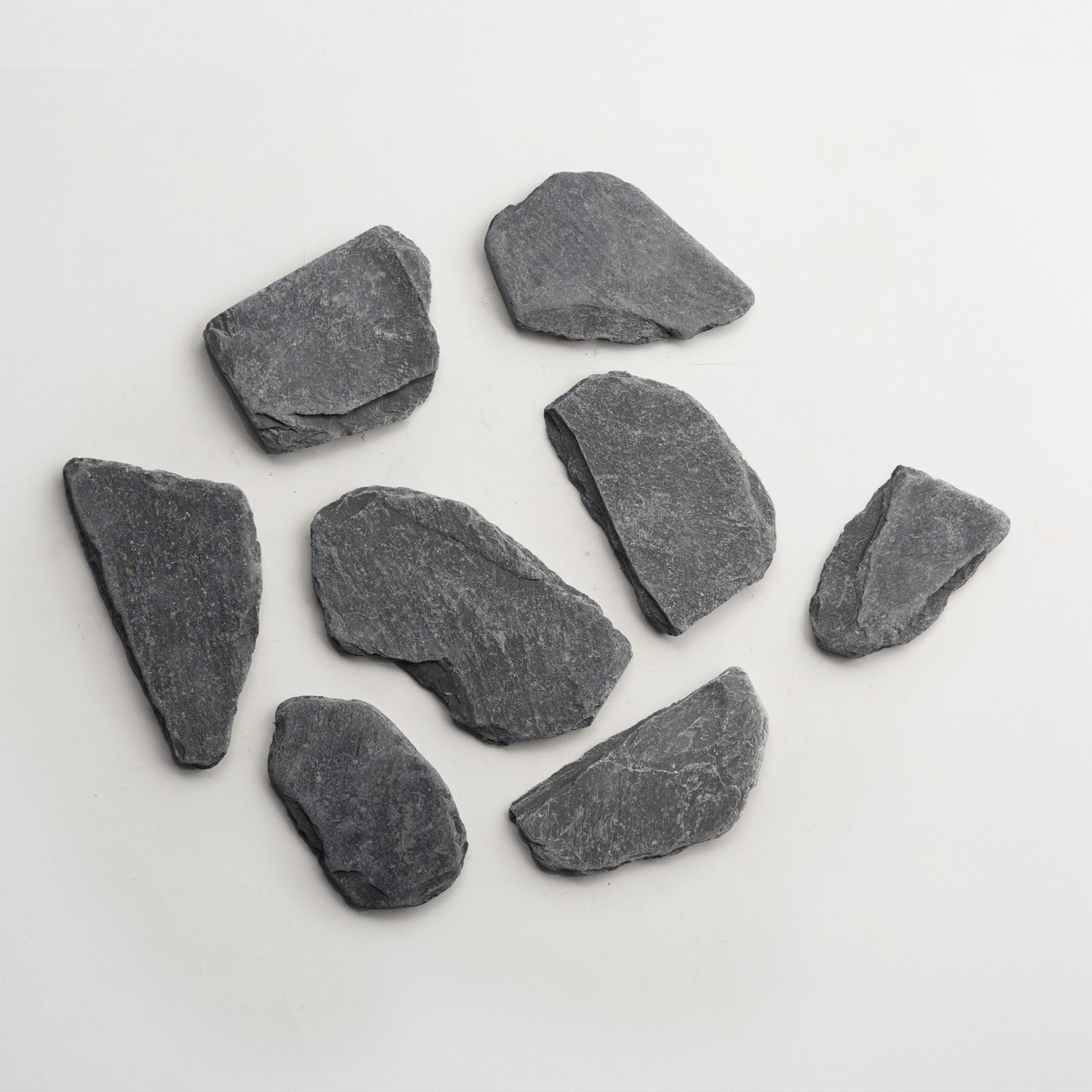
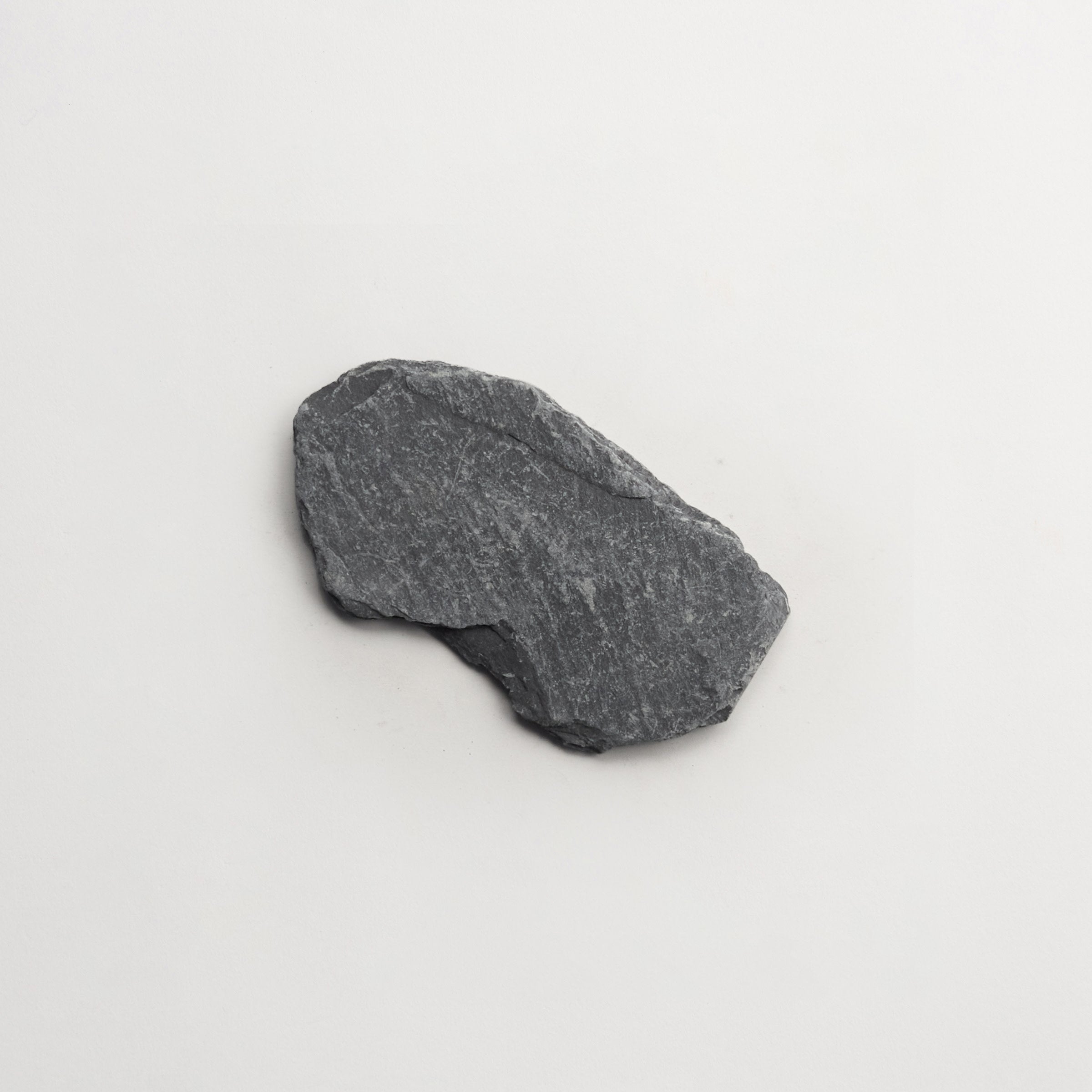
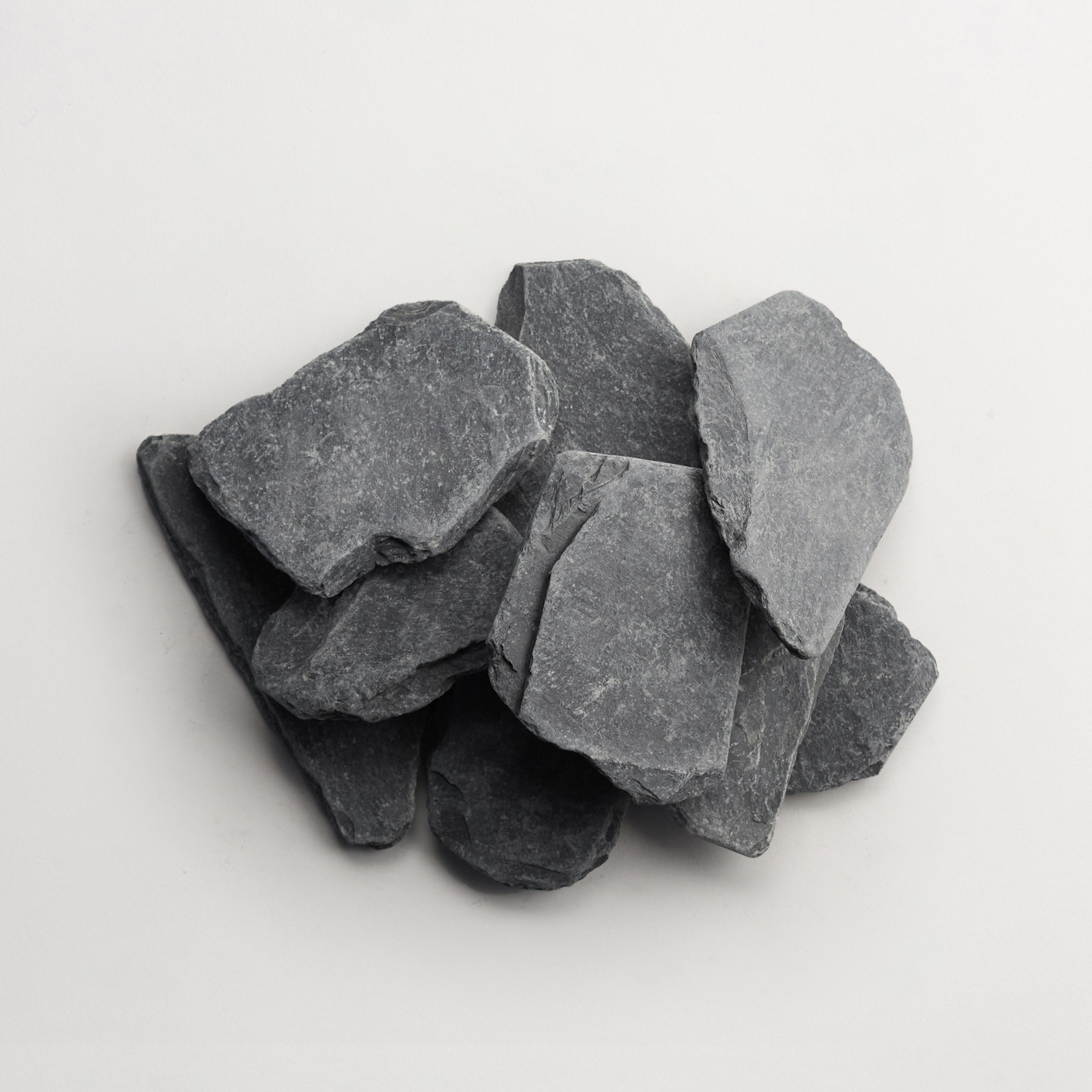
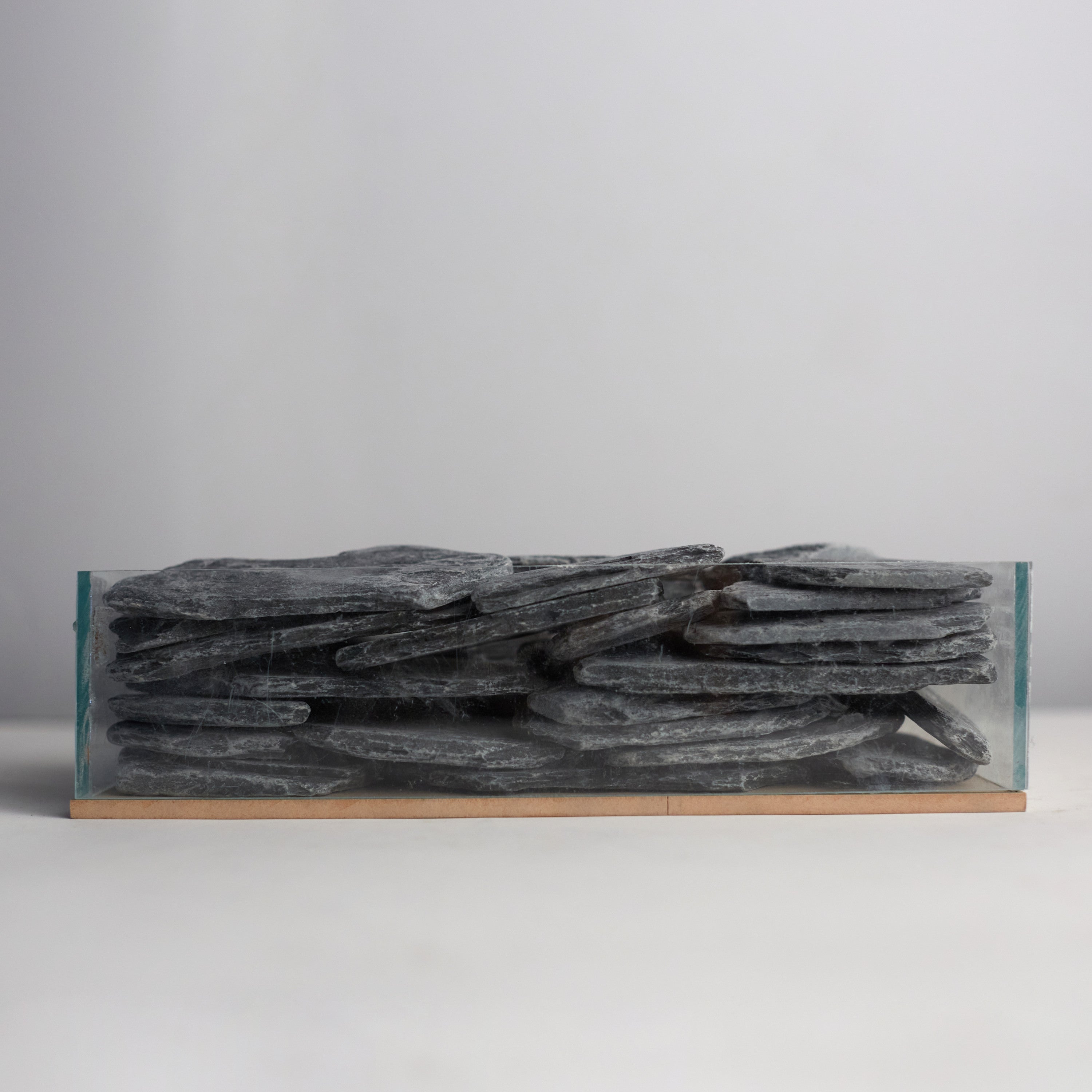
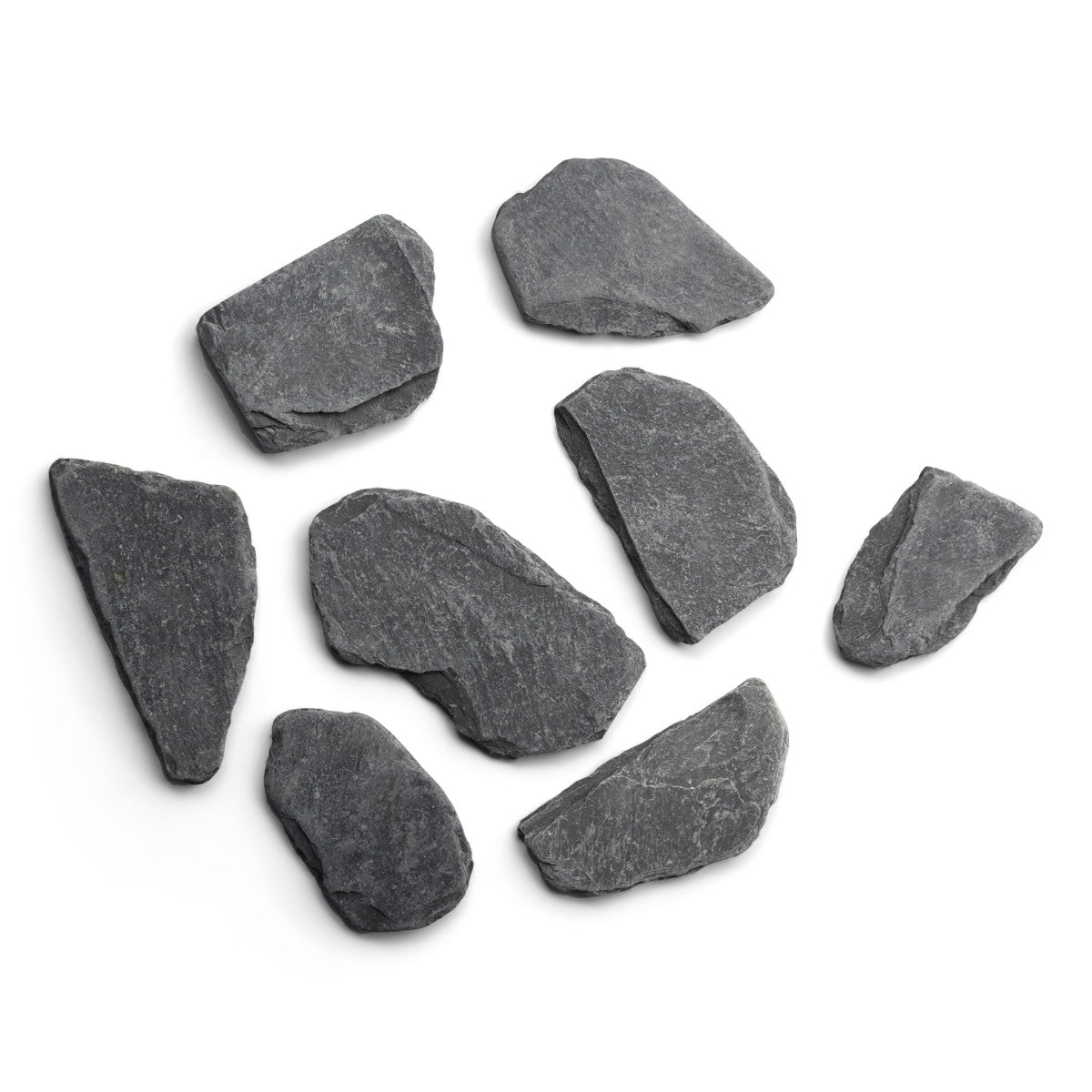
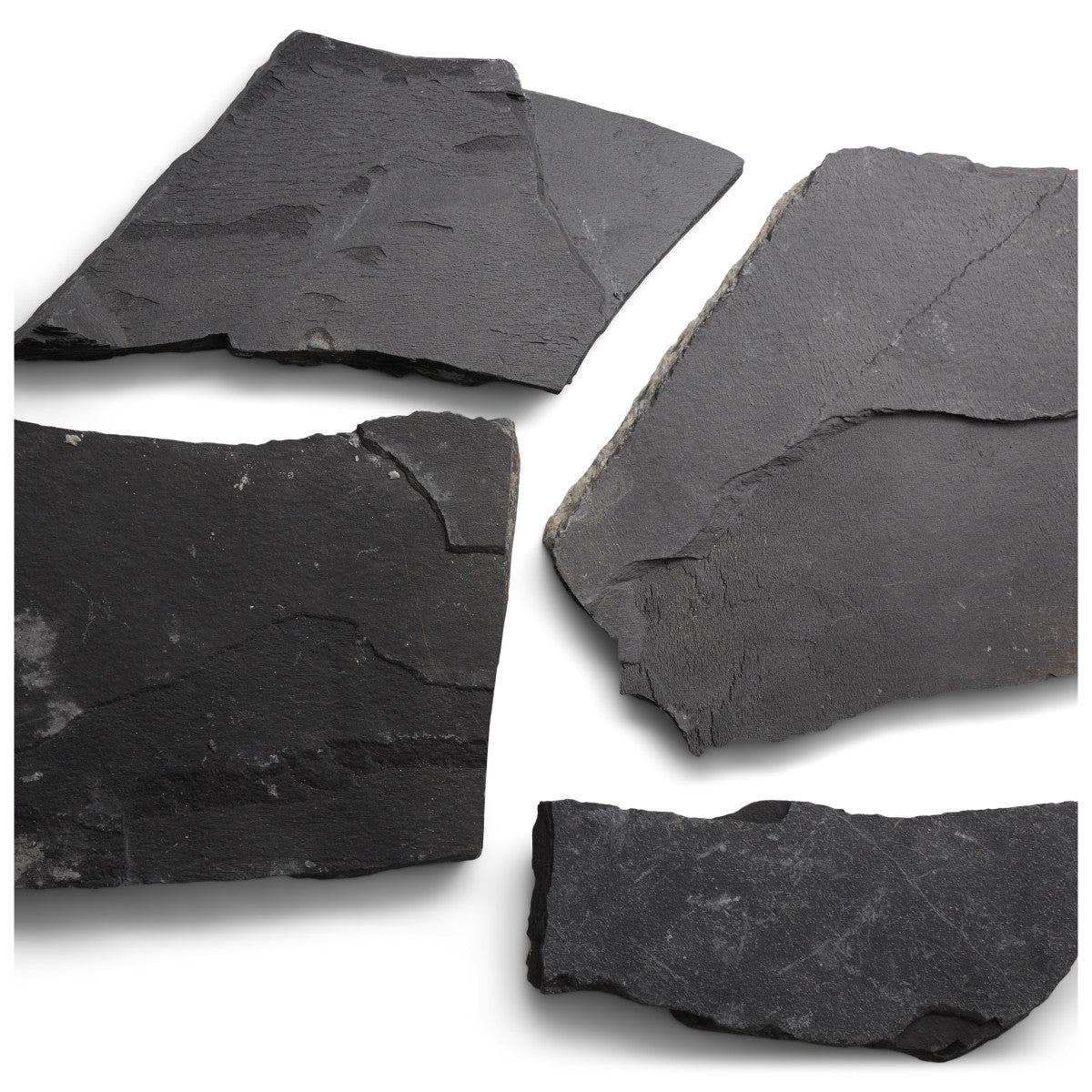
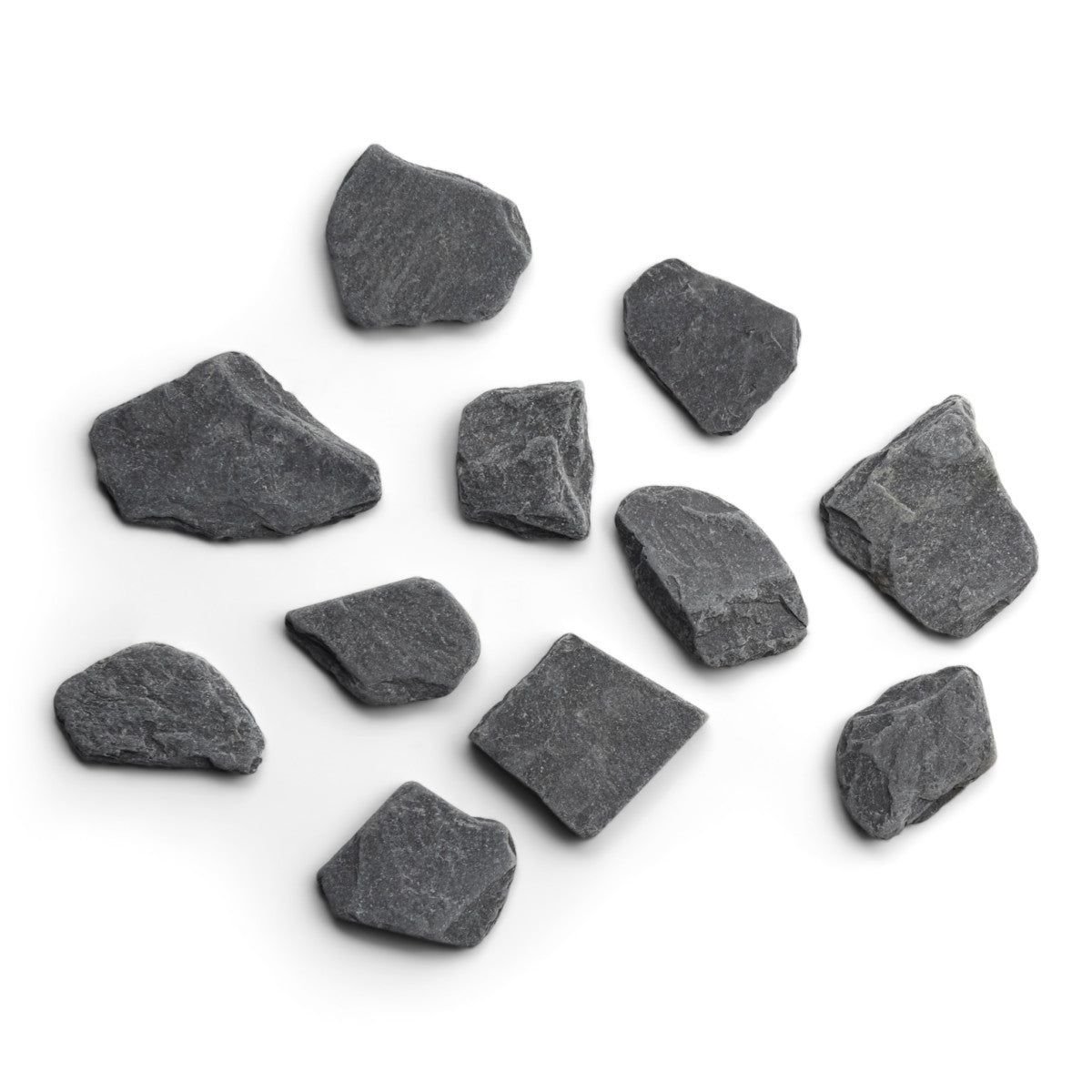
Slate introduces more visual movement. Its layered structure and natural variations in gray, green, purple, rust, and charcoal can give outdoor surfaces a painterly quality that feels connected to the landscape. Rather than creating a perfectly uniform plane, slate adds subtle shifts in tone and texture that reward a closer look.
This character suits garden paths, intimate courtyards, and spaces shaped around artisan storytelling. Our Grangestone flagstone collection in slate translates this expressive character into a curated tile format.
Basalt’s Sleek, Monolithic Modernism
Basalt brings a different kind of drama: restrained, dark, and almost monolithic. Its fine grain and charcoal-to-black palette create a sleek foundation for modern architecture, minimalist courtyards, and modern pool surrounds. Against lush plantings or warm wood, basalt provides contrast without relying on a busy pattern.
Which brings us to exciting news: we are launching a basalt collection this fall, offering a new way to bring this contemporary look into outdoor spaces.


Performance Underfoot: Durability, Slip, and Weather
Appearance may draw you to a stone, but outdoor conditions determine whether it will remain a good fit. Climate, water exposure, traffic, finish, and installation all affect performance. That’s why comparing the slate vs. bluestone pros and cons means looking at each stone’s specific characteristics and intended application.
Hardness and Wear
Bluestone and basalt are both dense, hard-wearing stones you’ll find in many high-traffic outdoor settings. Slate also performs well — as long as you choose a dense variety. When in doubt, consult the material’s guidelines to determine suitability for your climate.
This is especially true in freeze-thaw climates. All three stones require careful attention to water absorption, as water entering the stone can freeze and cause damage. Bluestone, basalt, and slate can sometimes benefit from regular sealing for this reason.
Slip Resistance and Finish
The finish can influence traction as much as the stone itself. Cleft slate retains a naturally textured surface, while flamed basalt develops a rougher texture designers often choose to improve grip. Bluestone is available in different finishes, too, including textured options that are ideal for outdoor use.
Honed surfaces offer a smoother appearance for all three stones, but remember: finishes that are too polished can become slippery when wet. For pool surrounds, sloped walkways, and other high-traffic areas, evaluate the actual product's slip resistance rather than relying on the stone category alone.
Sealing and Long-Term Care
Sealing needs depend on the specific stone, its porosity, its finish, and the conditions in which it will be installed. Dense slate and basalt may need little or no sealing, while some bluestone varieties benefit from a suitable penetrating sealer.
A sealer can help reduce staining, but it does not replace appropriate drainage or routine care. Avoid harsh chemicals for everyday maintenance, opting instead for gentle and specialized cleaning products.

Matching the Stone to the Room
The most useful way to compare slate, bluestone, and basalt is to consider where each will live. A patio has different needs from a driveway, and a pool deck calls for different surface characteristics than a decorative wall.
Patios and Outdoor Living Rooms
All three stones can anchor an outdoor living room, but they create different atmospheres. Bluestone suits patios whose architecture calls for clean lines and consistent paving. Slate, thanks to its tonal variation, is a natural fit for relaxed courtyards and garden-facing terraces. Basalt creates a striking foundation for modern spaces, especially next to minimalist furniture and landscaping.
When weighing the pros and cons of a flagstone patio, consider not only durability but also how the stone's color, shape, and texture will look across a broad expanse.
Walkways and Garden Paths
If you're gathering flagstone walkway ideas, think about how your design choices will guide the eye. Bluestone's consistency lends itself to running-bond layouts and orderly ashlar patterns, while slate's natural variation works beautifully in more relaxed compositions. Basalt can establish a crisp, contemporary route through a garden, especially when rectangular units emphasize direction.
Driveways
Driveways place greater demands on paving because they must support vehicle loads. Properly specified bluestone and basalt can be strong candidates, provided the stone thickness, substrate, joints, and installation method are designed for vehicular use. Slate, on the other hand, is not typically appropriate for vehicles. Before committing, confirm load-bearing specifications in the stone’s material guidelines.
Pool Surrounds and Wet Zones
Around pools, slip resistance is crucial. Basalt's low porosity and availability in flamed finishes make it a great option for pool decks. It’s even among the best tile for saltwater pool decks, since basalt is rated for that environment, in particular.
Textured bluestone and suitable slate varieties can also work well, provided their wet traction and water absorption characteristics meet the project's requirements. Polished options should be avoided, since they tend to become slippery near water. This applies to a limestone or travertine pool deck as well.
Stairs, Walls, and Fireplace Surrounds
Stairs demand reliable traction, consistent dimensions, and well-designed edges. Textured finishes and appropriate nosing details can help make stone steps safer, whether you choose bluestone, slate, or basalt.
For retaining walls and other vertical applications, the decision shifts toward appearance, installation method, and the weight the structure can support. Slate's layered character can add depth to a garden wall, while basalt offers a more monolithic effect and bluestone provides a traditional architectural look.
Fireplace surrounds introduce another consideration: heat. Confirm that a particular stone and installation system are suitable for the intended exposure, following the fireplace manufacturer's clearances and material requirements.


Basalt columns. Photo courtesy of Tamara Bitter.
Can These Stones Work Together?
Choosing one stone for every outdoor surface isn't always the most compelling design solution. Pairing materials can establish visual hierarchy, distinguish functional zones, and create transitions between the architecture and landscape.
Imagine a bluestone patio grounded by dark basalt pool coping, with a slate accent wall introducing color and texture nearby. Each material contributes something different without competing for attention.
The key is to establish a relationship among the stones. Repeated undertones, complementary finishes, and consistent geometric formats can help create cohesion. Thoughtful combinations turn the question of basalt vs. bluestone or slate vs. basalt into an opportunity to layer character throughout your project.
Choosing with Confidence
The difference between slate, bluestone, and basalt comes down to more than color or durability. Each type of outdoor tile has its own geological history, visual language, and practical considerations. Bluestone brings structure, slate introduces natural variation, and basalt offers a sleek presence. The right choice depends on the atmosphere you want to create, the conditions the material must withstand, and the role each surface plays in the larger design.
You may find that one stone suits the entire project — or that combining two or three creates exactly the atmosphere you’re looking for. Explore the stone collections built for every outdoor room, including our newest basalt arrivals.
Frequently Asked Questions
Is Bluestone the Same as Basalt?
No. In the Northeastern United States, bluestone generally refers to a sedimentary feldspathic sandstone, while basalt is an igneous rock formed from cooled lava. The exception is regional terminology: in parts of Australia, the trade name bluestone commonly refers to basalt.
Is Bluestone the Same as Slate?
No. Northeastern US bluestone is a sedimentary sandstone, whereas slate is a metamorphic rock formed from shale under heat and pressure. Both can be used in outdoor paving, but their textures, color variations, and material characteristics differ.
Is Bluestone the Same as Slate?
There is no universal winner. Bluestone and basalt are generally dense, hard-wearing options, while appropriately selected slate can also perform very well outdoors. The specific stone, finish, climate, installation, and intended use matter more than a simple ranking.
Is Bluestone the Same as Slate?
Yes. Basalt can be a strong choice for pool surrounds because of its density and low porosity, and flamed finishes can provide useful traction. Confirm a product's wet slip performance, compatibility with saltwater exposure, and suitability for pool-deck installation before choosing it.
Colorway
-
Slate
Collection
-
Grangestone
:
Sub Collection
-
le Disque
Material
Length
-
4
" x
Width
-
4
" x
Thickness
-
¼
"
Unit of Measurement
-
sqft
/
Price per Unit
$


Colorway
-
Slate
Collection
-
Grangestone
:
Sub Collection
-
Cords
Material
Length
-
8
" x
Width
-
8
" x
Thickness
-
⅞
"
Unit of Measurement
-
sqft
/
Price per Unit
$


Colorway
-
Slate
Collection
-
Grangestone
:
Sub Collection
-
Torrone II
Material
Length
-
4
" x
Width
-
16
" x
Thickness
-
¾
"
Unit of Measurement
-
sqft
/
Price per Unit
$